The demise of a prominent East Knoyle family, the Seymours (of Jane Seymour fame), meant that the Clouds estate (or Clowdes as it was then), became available for purchase in the 1880s and was sold to Percy and Madeline Wyndham. Clouds took its name from a previous owner, sometime before 1551.
Percy, the favourite son of Lord Leconfield, grew up at Petworth House and came from a very wealthy background, owning large estates all over the country. He was widely-travelled, hot-tempered, (and foul-mouthed apparently), an aristocratic Tory MP who loved hunting, shooting and golf. He met his wife Madeline in Ireland and they married in 1860. She was artistic and creative and they seem to have been very much in love, although there are suggestions of infidelity on both sides.
They employed architect Philip Webb to design a grand house for them. He had already worked closely with William Morris so the house was to be an exemplar of the Arts and Crafts movement. Webb favoured employing a London firm of builders to assure a high standard of building, but Percy chose instead a Gloucester firm who were cheaper. (This is an echo of the conversations we have with our own architect!) The existing Georgian house had been demolished, and building began in 1881 to create a gothic-revival, but at the same time, a warm family home. The interior contained plasterwork, friezes, William Morris patterns and paintings by Burne-Jones, all curated by Madeline. They moved in in 1885.
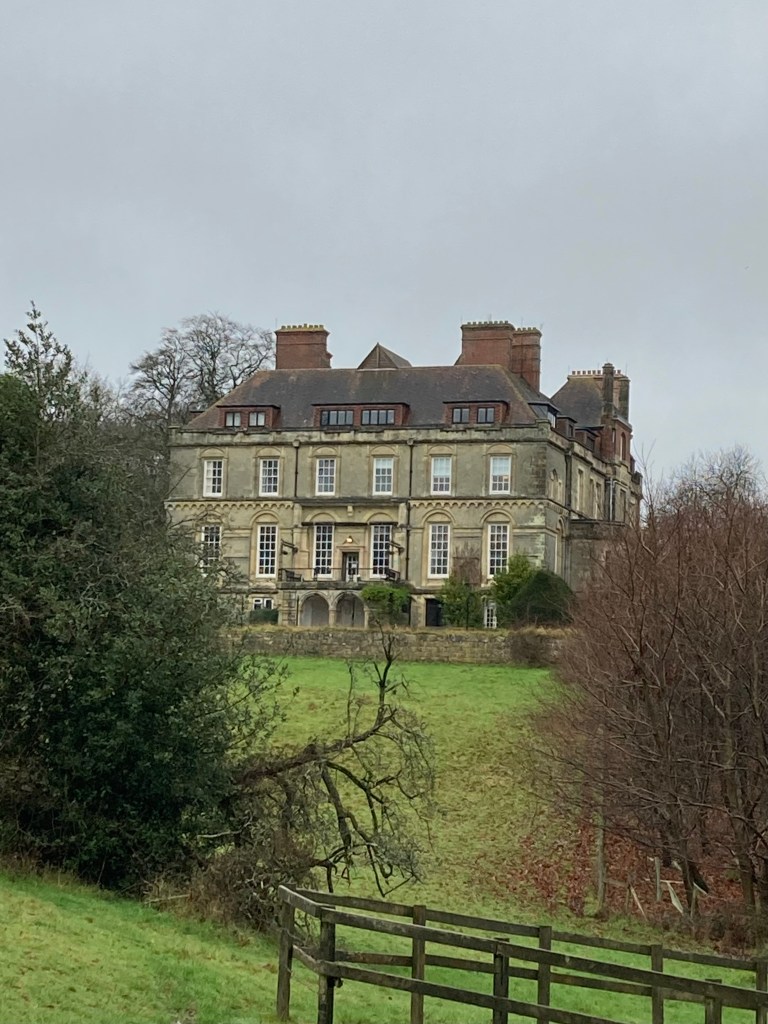
Clouds was a happy home, alive with people and dogs. It was called the ‘house of the age’. There were regular weekend house-parties and Clouds became the venue for gatherings of The Souls – a group of aesthetically-minded, intellectual and prominent artists and politicians, such as Burne-Jones, Henry James and Arthur Balfour. In fact, the list of names of members of The Souls is remarkable in that among them, their spouses and their children, they have powerful and well-connected influence in every sphere of literary and political life in the late 19th century.
In 1888-9, the winter was severe, and still-hot cinders from a fire, put inside a cupboard, set fire to paper, which led to a devastating blaze throughout the whole house. Efforts to extinguish the fire were delayed because there were no phones, the access road for the Mere fire brigade was almost impassable due to snow, and the water supply was frozen solid. Horses pulling the fire tenders slipped on the ice and were too injured to continue, and village fire services were inadequate to cope with such an inferno. Everyone did their utmost and saved what they could, but eventually, fighting was futile, and they gave up. All that was left was a grand ruin. How amazing though that no lives were lost.
The Wyndhams claimed on their insurance policy, re-engaged the original team of designers and builders, and within 32 months, they moved back in. This time, Percy set up his own fire brigade, based locally. Percy and Madeline celebrated their golden wedding anniversary there in 1910 and Percy died in 1911. His ashes were collected in an oak casket made from wood collected on the Clouds estate.
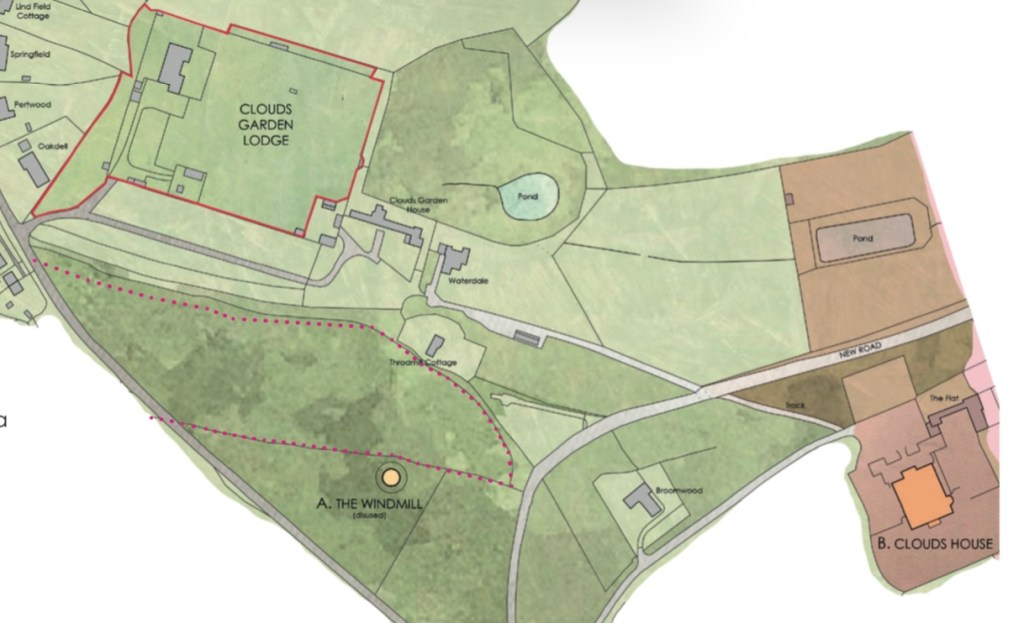
The track between the two is no longer open.
Percy adored his elder son and heir, George, who was multi-talented, handsome, literary and well-educated. George loved life and became MP for Dover. His son, also Percy, was known as Perf and he celebrated his 21st at Clouds House in 1908. Local people and servants seem to have been loyal and genuinely fond of the family.
After Percy’s death, George took over running the estate, and made some alterations, but he died soon after in 1913. In the later part of World War 1, the Wyndhams made Clouds House available as a convalescence home for servicemen – tragically, five of their grandsons were killed in service, including Perf. From then on, another grandson Guy and his son Dick tried to keep the estate going. There was a succession of tenants, starting with the Duke of Westminster until 1932. Dick Wyndham then sold off ancillary properties, furniture, fittings and books, and put the remains of the estate on the market, finally selling to speculators in 1936. The house was reduced in size in 1938 to make it more manageable, which quite probably saved it in the long term.
In the future, many large houses, including Knoyle House in the village, were demolished completely. We all saw the demise of large houses predicted at the end of Downton Abbey! In the second World War, the owners moved out and Clouds became a secretarial college, while the army requisitioned part of the grounds to prepare for the D-Day landings. Next, it was a Church of England home for unwanted babies, then a school for delinquent boys, which in turn closed in 1983. It is now a rehab centre for dependency and addiction treatment (with some high-profile clients and trustees, we gather).
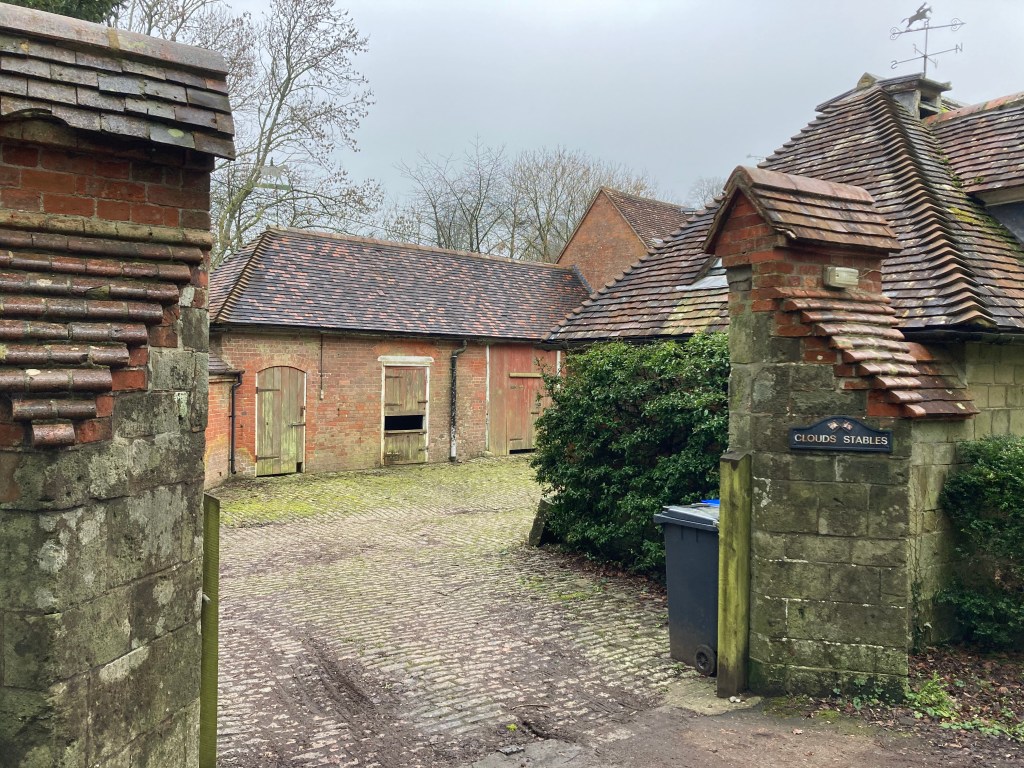
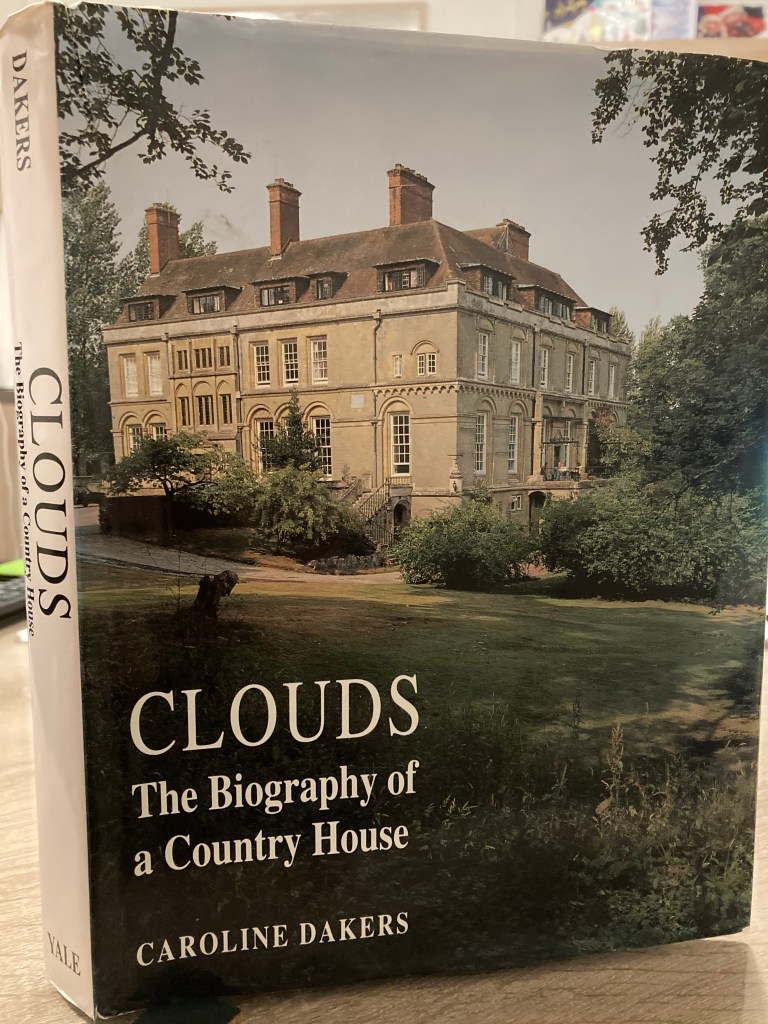
There are more details available in a book called Clouds House; The Biography of a Country House. It’s still a Grade II * listed building and there remain several buildings in the village with the Clouds name, including Clouds Park, Clouds Lodge, Clouds Stables, and of course Clouds Garden Lodge! We have thought of changing the name of ours, as the style of house we’re building won’t really be a ‘lodge’ but don’t want to lose the Clouds connection. All suggestions welcome….
 Chris and Bev - Heads in the Clouds